Mainly known for its principle of mimicking forms and materials observed in living organisms, biomimicry is a highly potential lever for designing innovative solutions to support the ecological and energy transition of our territories and organizations, provided that a bio-inspired development is engaged, built on living systems.
Trois niveaux d »inspiration tirés du vivant au service de l’innovation dans les sociétés humaines
From the Greek "bio", meaning life, and "mimesis", the act of reproducing or depicting and imagining things, biomimicry is defined as "innovation inspired by nature" according to Janine M. Benyus (1997). Drawing inspiration from living organisms is fundamentally based on observation. From this observation emerges a set of remarkable properties that can inspire humans at three levels to find solutions to the problems they seek to solve:
- The form adopted by living beings. Velcro, a self-gripping fastening system, was inspired, for example, by burdock flowers. Another example is that engineers working on the Japanese Shinkansen train were inspired by the shape of the beak and head of the kingfisher to design the front of the train. The adoption of this new shape has led to a 15% reduction in electricity consumption and a 10% increase in train speed.
- Les procédés et matériaux présents dans la nature, notamment les processus de fabrication des matériaux. Par exemple, les coquillages sont particulièrement intéressants car ils utilisent le CO2 comme matériau de construction. Cela pourrait inspirer un biociment fixateur de C02. Autre exemple d’inspiration tirée du vivant : l’industrie aéronautique s’intéresse de près à la peau de requin, pour son « effet riblet » : des micro-rainures à sa surface maintiennent l »eau près du corps, diminuant la résistance du fluide et améliorant l’hydrodynamisme. Reproduire ce phénomène sur les surfaces extérieures des avions améliorerait leur performance tout en réduisant la consommation énergétique. Enfin, imiter le phénomène de la photosynthèse permettrait d’innover dans la production de l’énergie solaire en concevant des cellules photovoltaïques à faible impact environnemental.
- The systemic and interactions between species and ecosystems. This encompasses both the interactions that species have with each other and the symbiotic effects that exist in the overall functioning of natural ecosystems. Forests and coral reefs are examples of ecosystems that rely on a set of complex interrelations ensuring the long-term sustainability of the system.
One point of caution is that drawing inspiration from nature does not necessarily guarantee the design of solutions that contribute to sustainable development in society. Indeed, biomimicry could prioritize the efficiency or effectiveness of controlled technologies without considering the impacts generated on the environment. Thus, while examples of biomimicry are very old, aligning this approach with sustainable development is much more recent and dates back to the work of J.M. Benyus.
The six key principles of living systems for resilience and ecological and energy transition according to Vertigo Lab.
Biomimicry has primarily manifested until now as the reproduction of shapes or processes and manufacturing methods observed in living organisms to innovate in technical and technological fields. At Vertigo Lab, we believe that living systems are also a source of inspiration for innovation at the scale of our organizations, our businesses, and our territories. We should go beyond these isolated biomimicry practices focused on technological and technical innovation to concentrate on a field of inspiration that is still underutilized: living systems as a dynamic system organized around interrelations between species and ecosystems.
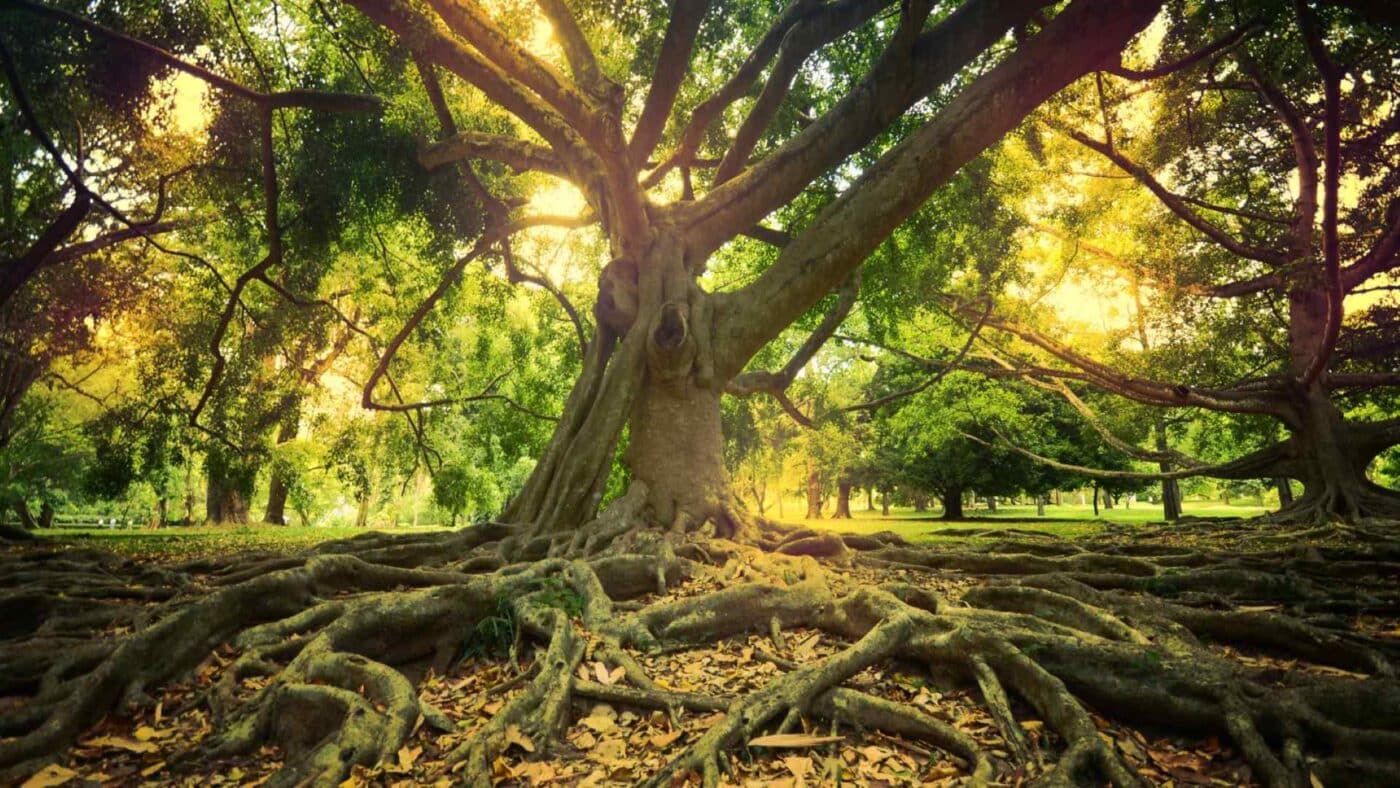
Indeed, many living species and ecosystems have managed to create sustainable living conditions and develop healthily for millions of years. Tropical forests and coral reefs are a testament to this. As Gilles Boeuf reminds us [1], "it is important to recall the astonishing resilience of the living world, resilience from which we would undoubtedly benefit by drawing more inspiration." This is precisely the direction that the Economic, Social and Environmental Council has also taken: "to live and create the necessary conditions for the continuation of life, this is the roadmap of the living. It aligns with that of sustainable development. At a time when ecological and energy transitions are underway, these faculties of nature can therefore help us innovate sustainably." [2] The report also emphasizes the importance of prioritizing the complex balances of ecosystems: "seeking to imitate or more modestly to draw inspiration from the ecosystems and the extremely complex interrelations that characterize them constitutes the most ambitious stage of biomimicry, but also the most potentially impactful."
Going beyond biomimicry: thinking in living systems
This ability to create conditions conducive to life has been built on a set of operational principles that are naturally implemented concurrently. For Vertigo Lab, six operational principles are key to guiding development projects in territories, businesses, and organizations<:
- La nature fonctionne par cycle : les éléments constitutifs des écosystèmes sont reliés par des échanges cycliques de matière et d »énergie. Notamment, la nature recycle tout ce qu’elle produit : chaque déchet produit par une espèce va être recyclé comme matière première par une autre.
- Nature optimizes the use of resources and means: it is effective, efficient, and avoids losses and waste.
- Nature favors the use of local resources: it prioritizes local interactions and sources locally.
- Nature primarily uses flow energies (mainly solar energy)< and very little or no resource or stock energies such as fossil fuels.
- Nature relies on dynamic and interconnected balances: the constituent elements of ecosystems are multifunctional, fulfill key functions, and are essential for maintaining all processes. They function, interact, and are interconnected.
- Nature constantly innovates for resilience and diversity<: it uses constraints as opportunities.
Bioinspiration as a strategic compass
We prefer to speak of bioinspiration to combine the requirements of sustainability with the systemic and dynamic functioning principles of living systems in the inspiration process. By placing bioinspiration at the heart of its approach, Vertigo Lab supports territories and organizations in building their development projects to activate ecological and energy transition efficiently and effectively. Stay tuned...
References
- [1] Gilles Béuf, Proceedings of the "bio-inspired research" conference; CGDD, December 2012, References, July 2013. Available at: http://www.developpement-durable.gouv.fr/IMG/pdf/130725-Actes_biomimetisme-complet.pdf
- [2] CESE (2015), "Biomimicry: drawing inspiration from nature for sustainable innovation". Note of 9 September 2015