
Every week, the Lab shares with you a news item, project, or document that has caught its interest. This week, we are focusing on the launch of Coopek, a digital complementary currency that presents itself as the currency of the four transitions: food, energy, carbon, and social.
A newcomer in the ecosystem of alternative currencies
Last week, a newcomer appeared in the landscape of French complementary currencies: Coopek. Complementary currencies are currencies backed by the official currency of the country. They can be in paper or digital format, and circulate within a wide perimeter, or be locally anchored.
The spectrum of complementary currencies is broad; just like the diversity of their objectives. Indeed, we can distinguish: local currencies supported by citizen collectives aiming to promote the relocalization of the economy and exchanges in the territory; digital currencies promoting the circular economy and bartering; currencies encouraging eco-friendly actions and responsible consumption, or even the development of sectors such as renewable energies. Not all of them have a strong environmental ambition.
The study we are currently conducting for ADEME is thus examining the environmental impact of these different categories of currencies, as well as their economic effectiveness. This study will provide keys for analysis and understanding of these currencies that are rapidly developing [1].
Coopek, "a national currency of local interest"
Coopek, a project whose reflection began in 2013, differentiates itself from complementary local currencies, like Sol, primarily by its scope. According to one of its founders, Gérard Poujade, interviewed by Reporterre, Coopek is a currency "[2], Coopek is a currency "with national operation but local interest". It will thus be possible for users of the currency to spend their Coopeks in a network of national providers.
Successfully expanding their exchange loops and integrating a wide variety of providers is a real challenge for the development of local currencies; Coopek and its national scope can more easily overcome this limitation. It will thus be easier for merchants to pay their suppliers in local currency, and a greater variety of products will be payable in complementary currency. The digital aspect of Coopek should also facilitate its circulation.
Another notable difference from local currencies is that Coopek is not supported by an association but by a cooperative society of collective interest (
Finally, and it's worth noting, Coopek does not aim to compete with existing local currencies, but rather to complement them due to its scale of application.
Supporting local projects for ecological and energy transition
Coopek has three main ambitions:
- To develop a new economy without offshoring or speculation;
- To fight against poverty by promoting the creation of local activity and GDP;
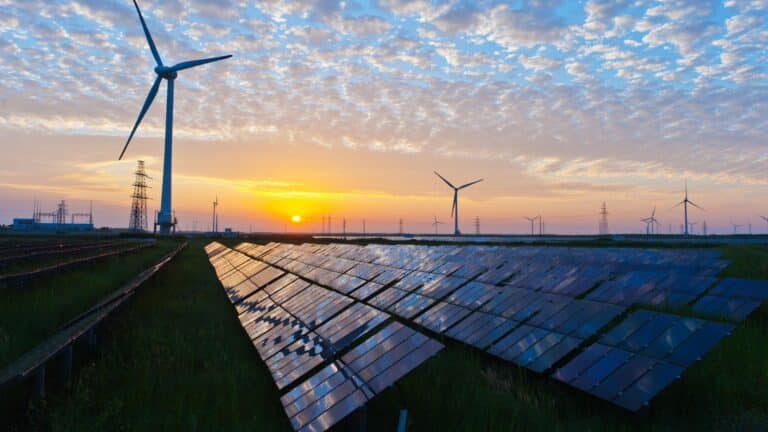
- To be the currency of the four transitions (food, energy, social, and carbon) through the preferential financing of energy renovation projects, biodiversity, revitalizing the local socio-economic fabric, and compensating or reducing carbon footprints.
To finance projects related to these four transitions, various tools linked to Coopek will mobilize funds. First, when the user exchanges their euros for Coopeks, 5% of the amount will be paid into an endowment fund, Ecodota, which makes donations to projects aimed at "regenerating ecological, social, and economic ecosystems"[3]. Proposed projects must contribute to job creation and economic integration in activities that have a positive impact on environmental issues. The user will then be able to choose online the project they wish to support. Additionally, euros exchanged for Coopeks will be placed in a guarantee fund deposited at NEF, a cooperative for solidarity finance, which supports transition projects. Finally, it will be possible for associations and businesses to take out zero-interest loans from the SCIC to develop projects that align with Coopek's values.
A new step for local and complementary currencies?
Local and complementary currencies today constitute a tool for reclaiming money, citizen engagement, and mobilization. Most of them highlight interesting environmental amenities (promotion of short circuits [4], organic farming, etc.), the environmental impacts of local and complementary currencies are still poorly measured today, due in particular to a lack of evaluation methodologies, time, and resources to dedicate to this evaluation. The environmental impacts of these systems often rely on raising user awareness.
Coopek, with its choice of economic model, operation, and methodological approach brings a new dimension to local and complementary currencies. By relying on a national network, a zero-interest loan system, and an endowment fund, the initiative aims to concretely and on a large scale support pre-selected projects for their positive impact on the environment. These projects must meet detailed selection criteria outlined in a specifications document. Furthermore, Coopek has developed an impact assessment methodology that will be useful for analyzing its actions.
Thus, Coopek, by overcoming certain limitations of complementary currencies (limited network and provider scope, strategy for supporting transition projects, or assessing socio-economic and environmental impacts), seems to be able to serve as a particularly interesting tool for ecological and energy transition. Following its development and the resulting outcomes will provide new insights into the role and potential of complementary currencies. Stay tuned…
References
- [1] Local currencies are multiplying, particularly in French territory, see the following map: http://monnaie-locale-complementaire.net/france/
- [2] The article from Reporterre on Coopek is available here: https://reporterre.net/Juste-lance-le-coopek-est-la-premiere-monnaie-nationale-d-interet-local
- [3] To learn more about this endowment fund: http://www.ecodata.org/
- [4] Furthermore, short circuits do not necessarily lead to positive environmental impacts, as explained in a study on short circuits published by ADEME in 2012.