The announcement of increased tax pressure on the pump price of diesel has reignited ongoing debates about environmental taxation. It also highlights the growing gap between declining rural and peri-urban areas on one side and large metropolitan areas on the other. This political decision once again makes ecology divisive, appearing to benefit only urban populations while being punitive for the rest of France, which is car-dependent. And this is happening even as the environmental and climate emergency has never been more pressing and requires the unity of all.
However, could the ecological transition, far from being a constraint, represent a solution to our exhausted extractive economic models? New economic models are emerging and can constitute real opportunities for declining territories, provided that they promote territorial development based on their natural and social specificities.
The limits of liberal economic theories
For dominant classical economic theories, the environment is just another variable, and ecology is seen more as a constraint than as a source of wealth creation. Indeed, according to the principles of liberal economics, the free functioning of market mechanisms ensures an efficient allocation of resources, and failures are rare. However, when they do exist, they can be addressed through tools like standards or taxation. The environment is then considered only through the lens of pollution, which can be regulated by environmental taxes (such as carbon tax).
However, this integration at the margin of the environment presents many limitations: a distorted view of the reality of socio-economic relationships, a lack of consideration for certain externalities, or even a lack of reflection on the extractive nature of our economies.
Moreover, tools such as environmental taxation do little in practice to address the internalization of damage related to pollution and the polluter pays principle. Fuel taxation, for example, is more of a political and budgetary lever than a tool for environmental preservation: the tax revenues from these taxes are allocated to the general budget with a yield objective, without respecting the polluter pays principle; the biggest polluters particularly benefit from tax exemptions (such as air transport).
This view of the environment also raises questions in terms of social acceptability and partly explains the grassroots movements against environmental policies (illustrated by the success of Trump and his climate-skeptical policies in the United States or the red cap movement in 2013). The introduction of new environmentally-focused taxes can lead to a decrease in purchasing power for households[1] and a loss of income for the economy in terms of GDP and jobs (hence the often-used term of punitive ecology).
However, this lost revenue is never put into perspective with the benefits of environmental policies (in terms of well-being, health, economic activities related to natural spaces, etc.), benefits that are visible in the long term while the growth rate is scrutinized daily and stakeholders' vision is focused on the short term.
Is ecology a source of wealth for rural and declining areas?
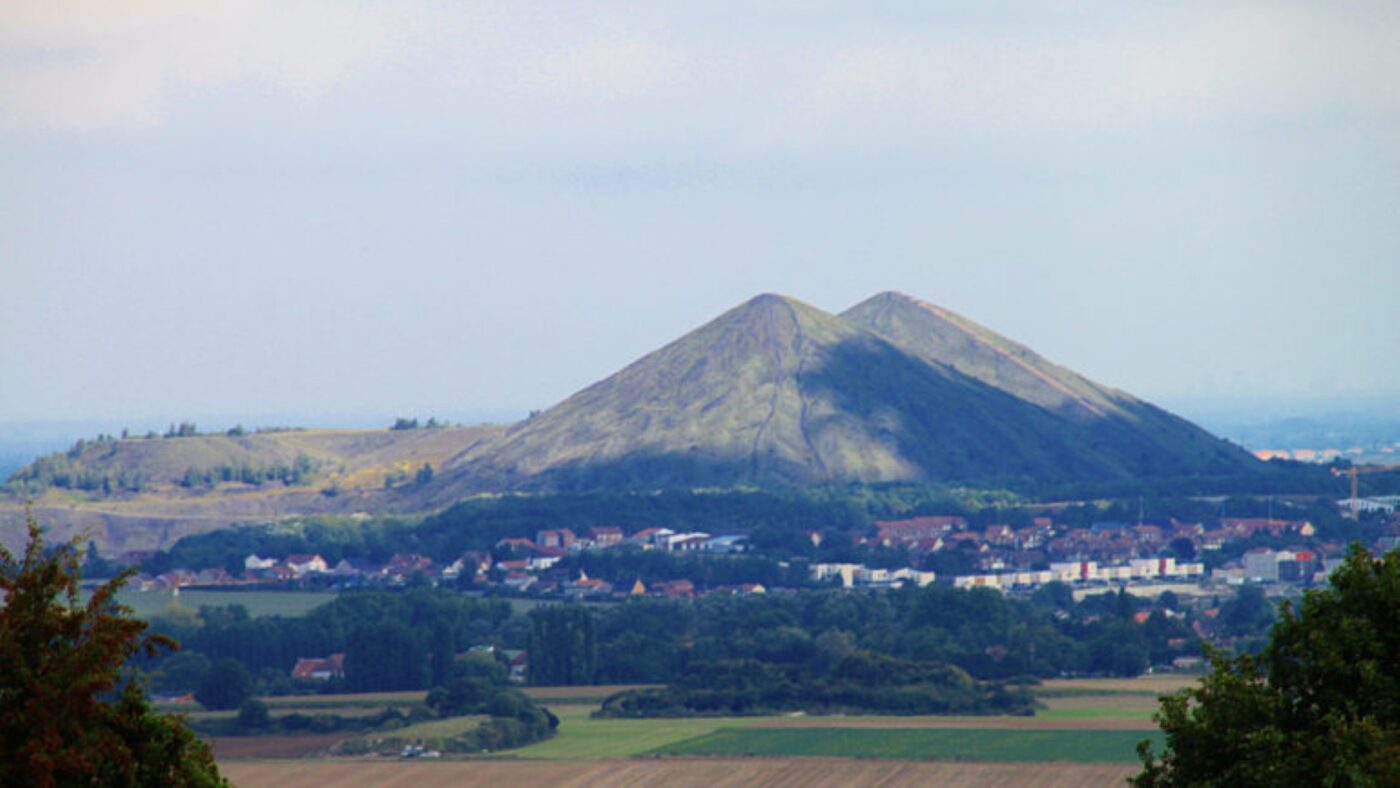
However, ecology can be a source of wealth creation and new non-offshorable jobs, especially for economically challenged territories. The renewal of Loos-en-Gohelle, which has prioritized sustainable development for many years, is one of the most striking examples.
Whether it is the city of Vitry-le-François finding new momentum through the implementation of a new energy policy or the territories of Drôme betting on biodiversity, the examples of territories revitalized by ecological transition initiatives are increasingly numerous.
Declining medium-sized cities and rural municipalities indeed have several advantages compared to urban metropolises for implementing ecological transition projects: availability of inexpensive land and the presence of local resources, notably (forest resources, agricultural resources, etc.).
More rooted and resilient territorial economic models
However, the contribution of ecological transition projects to territorial development is still poorly studied and poorly informed, as highlighted last June by the European Economic and Social Committee[2]. Nevertheless, analytical and evaluation tools for these projects exist, particularly in environmental economics, territorial economics, and innovation economics. The theory of the base[3], a key theory in territorial economics, thus offers interesting perspectives.
Indeed, according to this, projects contribute to economic development if they allow for a net inflow of money to the territory, meaning that the funds invested in the territory largely remain there[4], thus generating spillover effects on other sectors of the economy.
Ecological transition projects relying on local resources can generate net cash inflows into the territory that are much greater than traditional projects, while improving the quality of life for the population. This quantitative approach must be coupled with a more qualitative approach to consider the impacts on individual well-being. Improving the well-being of the population also contributes to the attractiveness of the territory and its economic development.
These socioeconomic impacts concern both the investment phase and the operational phase of the project. The investment phase indeed generates socioeconomic impacts (if the funding benefits local businesses), construction companies[5] and their local subcontractors are generally the main recipients of investment expenditures.
Loans (increasing the money supply for the benefit of the territory), state and regional subsidies (the funds would certainly be allocated to another territory if the project did not exist), and the self-financing of the company making the investment (allocation of the company's funds to the territory) are also important resources for local stakeholders[6]. However, the socioeconomic impacts generated by the investment phase are only temporary and disappear once the investment phase is completed.
It is the exploitation phase that largely explains the socioeconomic impacts of the project on the territory.
New economic development models: the example of energy
In the energy sector, electricity is currently produced in a centralized manner in France, and most territories import it, which constitutes a drain of wealth for the territory. The development of renewable energy sources (e.g., wind energy, photovoltaic energy, or biomass energy) is a way for these territories to produce electricity locally and redeploy activities at the local level. Local energy production indeed has a strong territorial anchoring by mobilizing local resources more. For example, heat production from biomass uses local forest resources instead of importing fossil resources (oil, gas, or coal).
Consequently, these projects help reduce import leaks from the territory by relocating energy production within it. For example, Grand Dax is betting on geothermal energy for heat production by further leveraging the thermal water network. The reduction of these import leaks concerns both the direct impacts of energy production and the indirect impacts (considering the entire value chain of energy production). Given that energy projects better utilize local resources[7], the spillover effects generated on other sectors of the local economy are more significant. The classic and recurring opposition between employment and the environment is therefore unjustified. The NegaWatt scenario has thus demonstrated that the energy transition in France could create up to 820,000 additional jobs by 2030[8].
The economic impacts of the ecological transition are not limited to reducing wealth leakage from the territory. The ecological transition can also enable the development of export industries, creating new wealth for the territory. This is the case, for example, with green chemistry and white chemistry (chemistry derived from renewable resources, such as biofuels) that market products made from locally available agricultural resources (and not from imported petroleum products). In France, a green chemistry cluster has developed in the Occitanie region[9]. Most of the companies in the cluster are located in rural areas, and their products are sold in markets (national and international).
Gains in well-being and quality of life are essential to consider
The ecological transition projects also contribute to improving the living environment of residents: reducing pollution (air, waste, etc.), maintaining a healthy ecological ecosystem, improving residents' health, and more. The improvement of this living environment contributes to a greater attractiveness of the territory, through the settlement of new residents (working or retired) in the area, with significant socioeconomic impacts on the economy. These new residents, through their spending, also contribute to the development of the local economy through the growth of the present economy. This spending also generates socioeconomic returns for the territory, with multiplier effects. Economists Davezies and Talandier (2014[10]) showed that the economic development of territories in France is explained half by residential bases (namely, home-work migration, retirees' spending, and tourists' spending).
New wealth is therefore being generated by these transition projects and is too often unmeasured. Evaluating these material and immaterial benefits would improve the management of economic development policies by allowing for better trade-offs between "classic" development projects and transition projects. The question of the impacts of ecological transition projects on social inequalities compared to conventional projects can also be addressed, particularly through the study of wealth distribution among different actors. Would ecological transition projects, generally more labor-intensive, present an opportunity to better redistribute wealth, particularly towards employees?
References
- [1] Households still heavily depend on fossil fuels that are high emitters of greenhouse gases. This is the case for fuels for road transport. Given the average home-to-work distance (30 km in France) and the lack of alternatives to road transport (especially in rural areas), an increase in the carbon tax will have more of an impact on households' purchasing power than on their energy consumption. In this sense, the TICPE (domestic consumption tax on energy products) is one of the taxes that has the highest budgetary yield.
- [2] See CESE website, "The economic impacts at the regional level of the energy transition are often overlooked".
- [3]< The base theory is an economic model that aims to understand the sources of development of a territory by studying the income flows between territories.
- [4]A net inflow of money is calculated by the difference between the inflow of new funds for the territory (source of wealth) and the outflow of funds from the territory (wealth leakage).
- [5] If a large construction company establishes a branch in the territory, the activities generated by the branch contribute to the GDP of the area in which it is located.
- [6] However, funding (excluding loans) from municipalities, inter-municipal communities, and departments does not generate additional socio-economic returns in the territory, as these funds could have been allocated to another project in the same territory (assuming that the territory boundary corresponds to that of the department).
- [7] These projects therefore contribute to increasing France's energy independence.
- [8] The circular economy is another relevant example here. It is indeed a sector with strong local roots and impact. The share of spending with local businesses is higher in this sector, and it relies more on local labor according to a study by the CGDD ("Industrial and Territorial Ecology, a Lever to Mobilize Local Stakeholders for Ecological Transition", 2014, Economy and Evaluation No. 185.
- [9]< For a description of the cluster, see here<.
- [10]< Davezies, L., Talandier, M., 2014, The emergence of productive-residential systems, La documentation française.