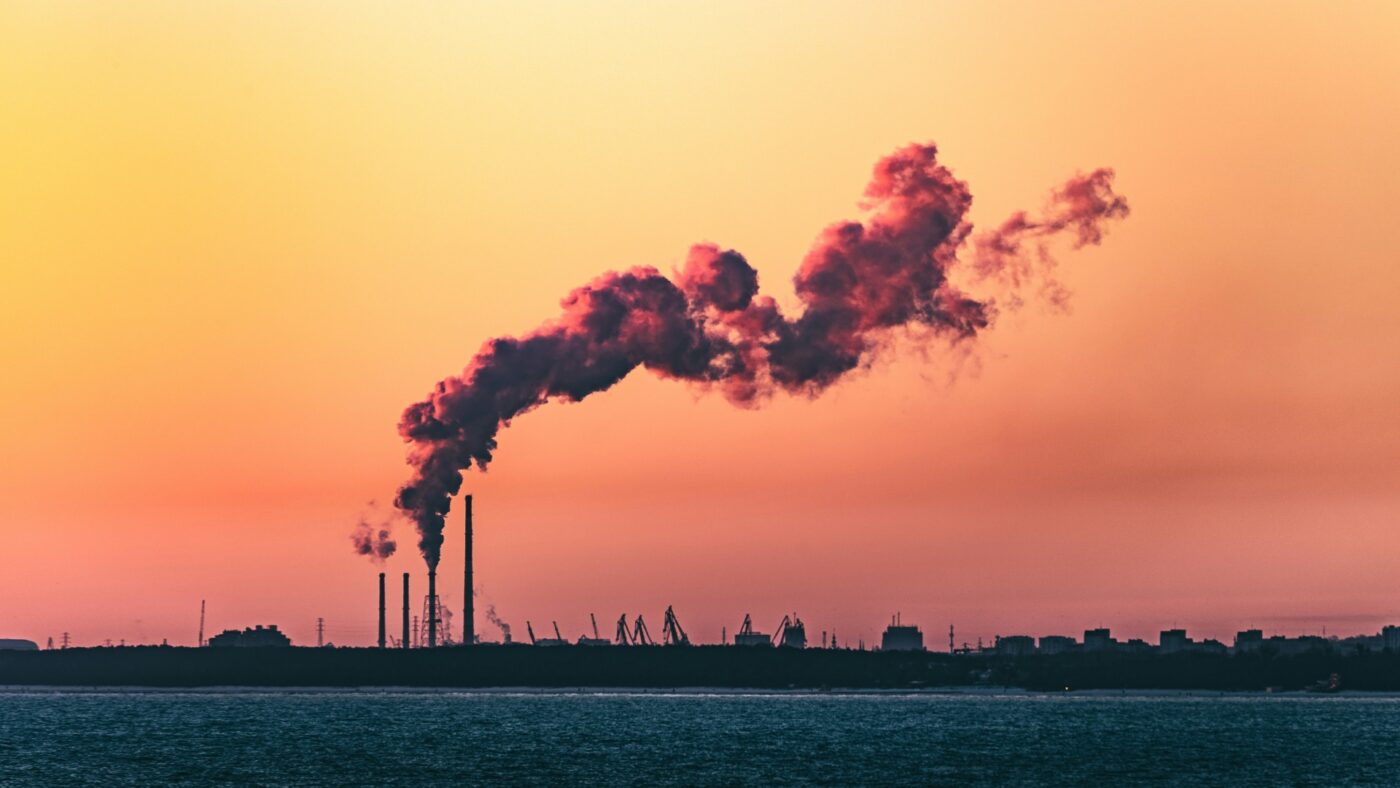
Each week, the Lab selects a document or project deemed particularly interesting and relevant and presents it in a few lines. This week, the Lab focuses on a report published by the General Council for the Environment and Sustainable Development (CGEDD) updating the sectoral analyses from February 2013 regarding the reduction of greenhouse gas emissions in France and achieving the Factor 4 objectives. This is an opportunity for the Lab to give you a brief overview of France's commitments in this area and to assess their implementation!
Factor 4, what's that?
Factor 4 refers to the goal set by France in 2005 to reduce its greenhouse gas emissions and energy consumption by four times by 2050 compared to their 1990 levels. Enshrined multiple times in French law (Grenelle of the Environment, Climate Plan, and more recently in the Energy Transition Law for Green Growth (LTECV)), it is based on climate projections made by the Intergovernmental Panel on Climate Change (IPCC). On a global scale, the goal, to limit an average temperature rise of 2°C by 2100, is to reduce emissions by at least a factor of 2 by 2050 compared to their 1990 levels.
But then, why a Factor 4 for France?
France started from the principle that this overall reduction target could not be evenly distributed among the different countries of the world, with industrialized countries emitting a lot and having emitted a lot in the past, and developing countries aspiring to raise their standard of living and therefore undeniably their emissions. It thus set the goal of a reduction well above the average, Factor 4.
Other commitments of France regarding the fight against global warming
The fight against climate change involves not only reducing CO2 emissions. Let's take a closer look at France's other commitments in this area at the international, European, or national level.
At the international level, France committed, through the signing of the Paris Agreement at the end of COP 21 and during COP 22 in Marrakech in 2016, to achieve carbon neutrality[1] by 2050. It has also mobilized with the international community as part of an amendment to the Montreal Protocol to cap and then reduce hydrofluorocarbon (HFC) emissions, which have a global warming potential 10,000 times greater than that of carbon dioxide.
At the European level, the 2007 Energy Climate Package aims for 2020 to achieve the 3 times 20: a 20% reduction in GHG emissions compared to 1990, an increase in the share of renewable energies, and energy efficiency to 20%. The new Energy Climate Package, due by 2030, aims for a 40% reduction in emissions compared to 1990, as well as an increase in the share of renewable energies and energy efficiency to 27%.
Finally, at the national level<<, the LTECV of 2015 endorses and surpasses these various objectives< by aiming for a 40% reduction in greenhouse gas emissions by 2030 (New Energy Climate Package) and 75% by 2050 (Factor 4) compared to 1990, 23% of renewable energies by 2020 and then 32% by 2030, and a halving of final energy consumption by 2050 compared to 2012.
Not so simple after all!
To achieve these objectives, the country has equipped itself with various tools: National Low Carbon Strategy (SNBC), Multiannual Energy Programming (PPE), and Sustainable Mobility Strategy, which break down the objectives by sector and period to provide a clear roadmap for the various stakeholders.
What is the assessment today?
In the short term, the balance is quite positive. The European objectives of 3 times 20 are on track to be achieved, and even exceeded for some (24% reduction in GHG emissions projected by 2020, share of renewable energies at 21%, but energy efficiency increasing by 17% against the 20% aimed for in the objectives). The same goes for the 3.3% annual reduction planned to achieve Factor 4, which has been respected in recent years.
But, and this is where it gets tricky, all the difficulty (raised by the CGEDD report) lies in the continuation of these reductions!
Annual reductions to achieve the Factor 4, although respected for now, are slowing down and are not guaranteed for the coming years. Indeed, the report points out that the "business as usual" trajectory included in current models does not allow for the realization of Factor 4 by 2050. The same applies to the New Energy Climate Package, whose projections for 2030, indicating a 35% reduction compared to 1990, do not meet the targets.
These results must be highlighted alongside increasing decontamination costs as pollution decreases (each additional unit of decontamination is harder to achieve and therefore more expensive to implement). Thus, maintaining the necessary reduction pace to meet various objectives will require much greater efforts in the coming years than they have been until today.
What are the main sectors affected by these reductions?
Unsurprisingly, the three main sectors involved are agriculture, transportation, and construction. All three fail to achieve the hoped-for changes.
The transport sector
Inertia is significant, and transformations are slow. It remains the main emitter of greenhouse gases, accounting for nearly 30% of total emissions[2]. The growth in traffic in recent years, due to the increase in the total number of private and light utility vehicles, is explained by rebound effects, which refer to the increase in consumption linked to the reduction of limits on the use of a technology (e.g., improving the energy intensity of a vehicle leads to lower fuel consumption, but the associated rebound effect is the increase in the number of kilometers traveled by users).
Coupled with the drop in fuel prices since 2014, overall emissions have seen their level increase. However, the action pathways are known in the sector and are being developed in the territories: energy efficiency, modal shift[3], carpooling, etc. To date, only European regulations and the bonus-malus system have been able to contain the rise in emissions. However, the development of hybrid or electric vehicle production is relevant in the territory and could become a major development axis due to an already particularly decarbonized electricity production[4].
The building sector
The most energy-consuming sector (45% of total energy consumption[5]), it ranks second among greenhouse gas emitters, accounting for 26% of emissions. However, technical solutions exist in the sector; the renovation of buildings is the main challenge. However, it is significantly lagging behind the stated ambitions of 500,000 renovations per year (only 288,000 renovations completed for the private sector in 2014, and 105,000 for the HLM sector). Furthermore, the sector suffers from a lack of reliable data on the effects of renovations already carried out and requires close support, as the transition to action still poses problems.
The agricultural sector
It presents, for its part, more limited decarbonization possibilities than other sectors. Indeed, providing food for a growing population, even coupled with major changes in agricultural systems and eating habits (agroecology, flexitarianism[6], etc.), implies an increase in production volumes, and therefore emissions (related to land-use changes, livestock, etc.). Achieving a factor of 4 seems impossible, with the most favorable estimates only aiming for a factor of 2 to 2.5[7]. Positive developments are nonetheless worth noting, with the Ministry of Agriculture, Food and Forestry (MAAF) promoting agroecology, transformations in the food sector, and the fight against food waste.
The recommendations of the CGEDD report
They generally follow those of the 2013 report, while reminding of the need to accelerate the pace of emission reductions committed by France.
Through its scenarios, the SNBC primarily focuses emission reduction efforts on the building sector to achieve various targets (-54% in 2028 compared to 2013, against -30% for transport, -23% for industry, and -13% for agriculture). However, as we have seen, the reluctance to take action and the difficulty in accurately quantifying the effects of renovations on GHG reduction pose a problem.
To achieve significant reductions in greenhouse gas emissions, the CGEDD recommends the introduction of clear signals, such as economic incentives through a carbon price (partially realized with the introduction of the carbon component in the TICPE in 2014[8]), a technological development involving R&D, regulatory obligations like the introduction of renovation imperatives for buildings or vehicle motorization, and studying behaviors and the acceptability of measures. It also recommends the development of methodologies and indicators that take into account the entirety of the product life cycle, such as gray energy, and the rise of the circular economy.
In conclusion, the report reflects on the positive developments of recent years: advancements in technology (reduction in the cost of renewable energy), the signing of the Paris Agreement, the New Energy Climate Package, LTECV, while reminding us of the urgency of the situation, as global greenhouse gas emissions continue to rise.
The bulk of the efforts for France and Europe still remain to be made, the pace of emission reductions expected for the period 2030-2050 being incomparable to the current pace.< Nothing is lost yet, but mobilization of all stakeholders, over time, is necessary.
Through its numerous missions, Vertigo Lab observes, participates, and develops strategies aimed at limiting and reducing GHG emissions and concentrations. The studies conducted on food waste reduction, territorial climate-air-energy plans, and blue carbon are all means to gradually achieve the goals of Factor 4!
References
- [1] Carbon neutrality assumes that remaining carbon emissions are compensated by their absorption by carbon sinks, their storage, or by investing in international projects that generate carbon credits.
- [2] This figure remains in a low range, as emissions from international and air transport are not accounted for in these calculations.
- [3] The term modal shift refers to changes in the shares of different modes of transport, generally in favor of those that are more environmentally friendly.
- [4]< Do not confuse "decarbonized" and "renewable"; the first term means that production does not emit carbon dioxide, while the second means that the energy source regenerates faster than it is consumed. Electricity production in France is thus decarbonized at nearly 94% (2015 figures), largely due to nuclear power (76%). However, this, using uranium stocks, cannot be classified as renewable and also poses other issues (safety, waste disposal, etc.).
- [5] Figures from 2014
- [6]< Flexitarianism is the term for individuals who occasionally eat meat.
- [7]< Results obtained after comparison by Ademe of three scenarios carried out by Solagro, Oréade Brèche, and ISL. http://www.ademe.fr/sites/default/files/assets/documents/85265_synthese_agriculture_et_facteur_4.pdf<
- [8]< Internal consumption tax on energy products.