Each week, the Lab selects a document or project deemed particularly interesting and relevant and presents it in a few lines. This week, the Lab focused on the growing development of green infrastructure in urban, rural, and coastal areas presented in the European Commission brochure "Creating Green Infrastructure for Europe."
Green vs gray infrastructures: two visions of development
To address various urban development challenges (e.g., flood management, heat island management, improving well-being), policymakers can choose to invest in either so-called green< infrastructure or gray< infrastructure (see table below for illustration).

Gray infrastructures are man-made structures, such as those from civil engineering, while green infrastructures are based on the creation or development of a natural ecosystem to benefit from a range of ecosystem services. Thus, investing in green infrastructures means placing nature and biodiversity at the heart of cities. However, not all green spaces are recognized as green infrastructures. This includes, for example, "anthropized" green spaces like lawns. A green infrastructure must necessarily integrate into a connected network of green infrastructures and provide a certain number of services.
Multifunctional infrastructures serving territories
One of the main advantages of investing in green infrastructure is that they are multifunctional, unlike gray infrastructure which only aims to meet a single management objective. Investing in green infrastructure can simultaneously:
- Improve quality of life and human well-being by providing a quality environment.
- Improve biodiversity by linking isolated areas and increasing wildlife mobility.
- Protecting society from climate change and natural disasters
- Support a smarter and more integrated approach to development that reconciles often conflicting land use.
- Create new jobs and support economic growth in line with sustainable development goals through the development of green businesses
Investment in green infrastructure is not limited to urban areas; it also affects other environments such as rural areas and coastal zones.
In rural areas, intensively farmed agricultural land is not considered green infrastructure. To be regarded as such, agricultural land must be managed in a way that supports local biodiversity or promotes a more functional development that reconciles agricultural production with the development of ecosystem services (e.g., recreational activities, regulation of ecological processes).
An economic efficiency still underestimated
Investment in green infrastructure also concerns coastal areas. For example, the development of seagrass contributes to better coastal protection against erosion while forming natural carbon sinks (blue carbon). They also serve as spawning grounds for certain commercially valuable fish species.
Investment in green infrastructure is economically efficient: their implementation allows society to reduce its costs (e.g., costs avoided from natural disasters thanks to regulatory services, lower installation, maintenance, or upkeep costs compared to gray infrastructure) while contributing to an increase in well-being (e.g., use of ecosystem services for recreational or leisure purposes). Methodologies are being developed to assess the economic benefits arising from green infrastructure. For example, we can mention the green paper published by Jones et al. (2015) from the Strategic Economic Studies Institute of Vitoria[1] (Australia) or the report from the Mission Economy of Biodiversity (MEB) and CDC Biodiversity (2015)[2]. The challenge mainly lies in identifying a coherent set of monetary evaluation tools that can integrate all the benefits provided by green infrastructure. However, these evaluation experiences remain marginal and deserve to be further explored.
An approach at the heart of the ecological transition
The development of green infrastructures fits perfectly into the concept of bio-inspiration developed by Vertigo Lab. Indeed, working on green infrastructures requires adopting a systemic approach. Moreover, these infrastructures are a source of innovation contributing to ecological transition and the establishment of a circular economy.
References
- [1] Jones, Symons, and Young, 2015, Assessing the economic value of green infrastructure: green paper, Victoria Institute of Strategic Economic Studies.
- [2]< Mission Biodiversity Economy and CDC Biodiversity, 2015, Urban green infrastructures and development: towards an assessment of the socio-economic impacts of nature in the city, The BIODIV'2050 notebooks: understanding.
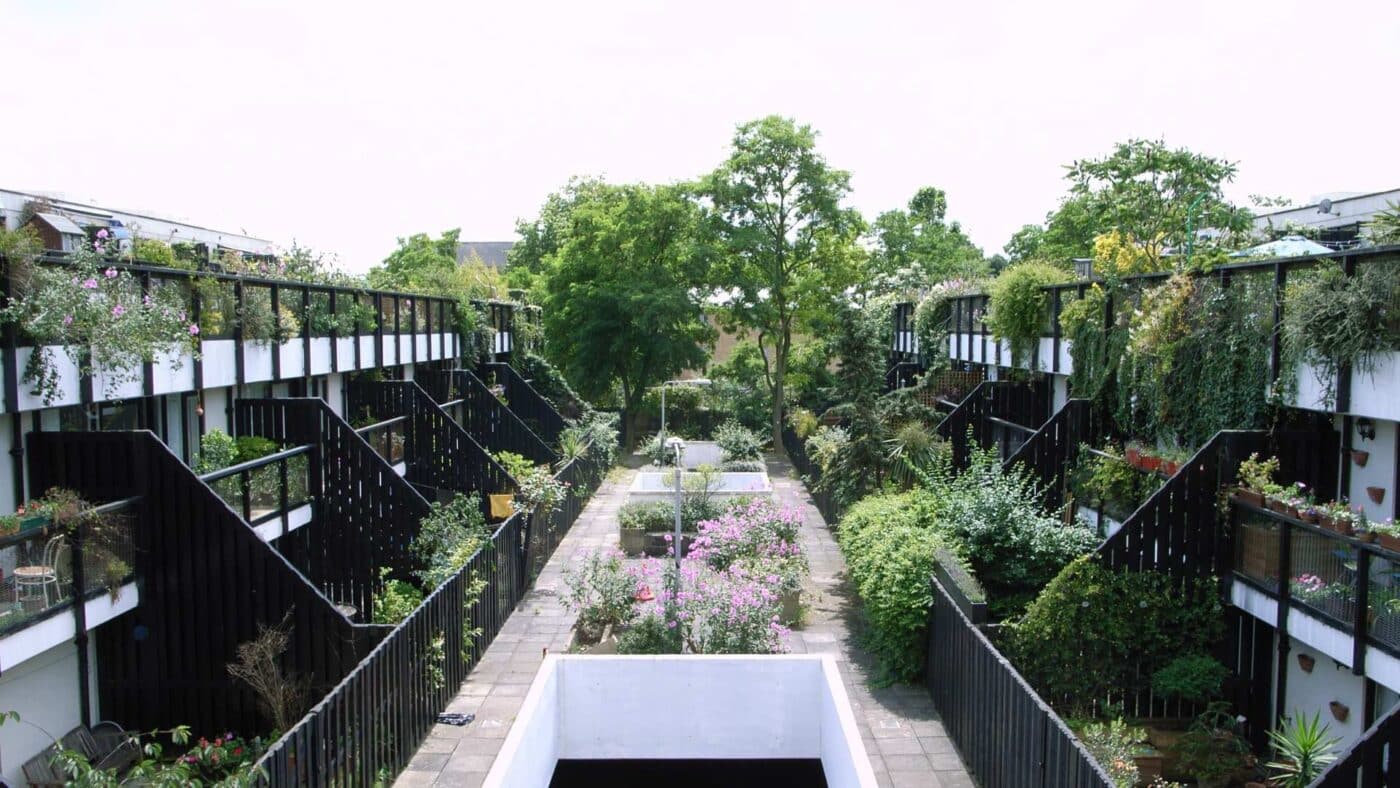
Cover image: Creative commons license, photo taken by Steve Cadman