Every week, the Lab selects a news item deemed particularly interesting and relevant and presents it in a few lines. This week, the Lab focuses on the link between agricultural yields and the use of pesticides and fertilizers at the landscape unit level: evidence or controversy?
A news item that challenges preconceived ideas about agricultural yields
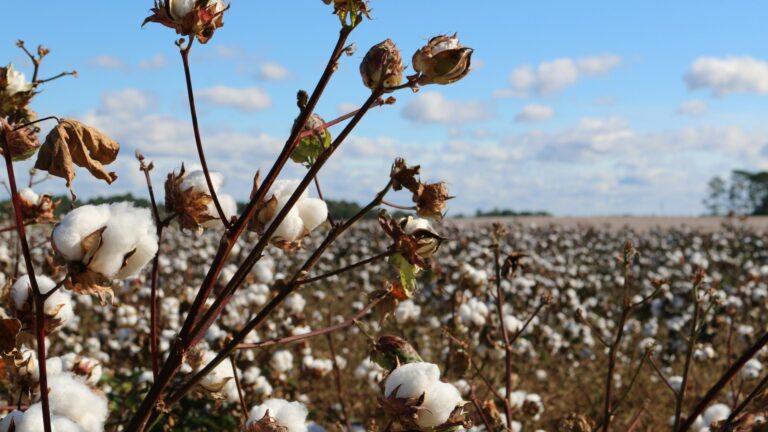
It's a bold claim made by a team of researchers from the Chizé Biological Studies Center: it may be possible to increase agricultural yields by decreasing the amounts of pesticides and fertilizers used, without replacing them with other inputs. This is, in any case, the result of their study highlighting the importance of proper weed management, commonly referred to as "weeds," to increase yields. Indeed, these weeds benefit from the nitrogen fertilizers spread by farmers to proliferate and compete with crops. Therefore, pesticides must be used to compensate: many costly inputs harmful to biodiversity are ultimately used for results that are sometimes not very convincing.
A systemic approach at the landscape unit level
This study on pesticides is a first in France, due to the specificity of its experimental conditions. The
Weeds, pollinators, and agricultural ecosystem services
However, the specific richness of these "weeds" is one of the keys to stimulating pollinators, which are essential for many crops, between two flowering periods of cultivated plants. It has thus been shown that the poppy can provide up to 60% of the pollen needed by bees during these lean periods! Even oilseeds (rapeseed, sunflower), which primarily use the wind to disperse the pollen necessary for seed formation, greatly benefit from an increase in the diversity and abundance of pollinators.
However, this biodiversity, both the weeds and the pollinators, is heavily threatened by the use of pesticides (which are themselves necessary to counter the side effects of fertilizers), particularly from neonicotinoids whose use is on the rise and which decimate bees and ground beetles [3]. The latter, small and very common beetles whose populations have declined by 90% in 20 years, are fundamental for many ecological functions and agricultural ecosystem services (they are, for example, natural predators of certain pests). It has also been demonstrated that pollinators can contribute to a third of plant yields, and even improve their quality, preservation, and commercial value [4].
Less inputs, more economic yield?
Using less fertilizer and fewer pesticides could therefore ultimately ... increase the economic yields of farmers, up to 200 euros per hectare of wheat! This is a new illustration of the benefits associated with maintaining or restoring ecosystem services. But this requires integrated management at the landscape unit level, since the ecosystems of each plot are not hermetically sealed from one another. Hence the need to implement coherent agro-environmental measures on a scale larger than that of cadastral boundaries [5].

Organic farming and effects on neighboring plots
From there to assert that organic farming increases the yields of neighboring plots, even if they are not organic, is just a small step. While it has already been shown that organic farming does indeed increase the diversity and abundance of pollinators at the landscape unit level [6], these untreated plots can also be a habitat for other species harmful to crops. This step may perhaps be taken with the new work of the Chizé Biological Studies Center, which aims to study the externalities, including positive ones, of organic farming at the landscape unit level, even if the persistence of chemical products used in soils and their impacts over several years makes interpretations at a given moment t delicate.
The work of Vertigo Lab on sustainable agriculture
In connection with these themes, Vertigo Lab has conducted several studies on sustainable agriculture, particularly on the remuneration of environmental services provided by agriculture and on farmer seeds as part of the "Aquitaine cultivates biodiversity" program. The assessment of the benefits associated with maintaining or restoring ecosystem services is also at the heart of Vertigo Lab's expertise (see, for example, our study on the added value of protecting mangroves in French overseas territories).
Sources
- [1] Agriculture: what if we produced more with less pesticides and fertilizers,
Le Monde Science et Techno , June 27, 2016. http://www.cebc.cnrs.fr/publipdf/2016/PAEE223_2016.pdf - [2] Petit, S., Gaba, S., Grizon, A.L., Meiss, H., Simmoneau, B., Munier-Jolain, N., Bretagnolle, V. (2016). Landscape scale management affects weed richness but not weed abundance in winter wheat fields, Agriculture, Ecosystems and Environment 223, 41-47. http://www.actu-environnement.com/ae/news/utilisation-pesticides-neonicotinoides-unaf-26888.php4
- [3] The use of neonicotinoid pesticides is not decreasing,
Actu Environnement , May 30, 2016. http://rspb.royalsocietypublishing.org/content/281/1775/20132440 - [4] Klatt, B. K., Holzschuh, A., Westphal, C., Clough, Y., Smit, I., Pawelzik, E., Tscharntke, T. (2013). Bee pollination improves crop quality, shelf life and commercial value, Proceedings of the Royal Society B 281:1775. http://www.cebc.cnrs.fr/publipdf/2016/CAEE229_2016.pdf
- [5] Caro, G., Marrec, R., Gauffre, B., Roncoroni, M., Augiron, S., Bretagnolle, V. (2016). Multi-scale effects of agri-environment schemes on carabid beetles in intensive farmland, Agriculture, Ecosystems and Environment 229, 48-56. http://onlinelibrary.wiley.com/doi/10.1111/j.2007.0030-1299.16303.x/abstract?userIsAuthenticated=false&deniedAccessCustomisedMessage=
- [6] Holzschuh, A., Steffan-Dewenter, I., Tscharntke, T. (2008). Agricultural landscapes with organic crops support higher pollinator diversity,
Oikos 117:3, 354-361.