
In France, more than thirty complementary local currencies are in circulation. As a tool for citizens to reclaim the economy and a lever to support local economic development and strengthen social ties, they also contribute to the energy and ecological transition. What would a successful future for France look like in 2050?
In response to this question, three visions of civilization emerge to meet environmental, democratic, social, and cultural demands: the green civilization, biocivilization, and connected civilization. [1]< For two of these visions, biocivilization and connected civilization, complementary local currencies, meaning currencies issued within and for a local circulation space and backed by the official currency of the country, "are becoming increasingly significant, even decisive in many" aspects of daily life." Systems for exchanging products and services based on time or another unit of exchange other than money are also developing strongly.
Indeed, current events are rich with signals already indicating a trend towards the development of these systems in France. In recent years, announcements regarding the circulation of new complementary local currencies (CLC for the rest of the text) have been regular, as illustrated by the latest ones, the Stück in Strasbourg and La Gonette in Lyon, which were launched in October and November 2015 respectively. Currently, there are more than thirty complementary local currencies in circulation in our territory. Similarly, systems for exchanges and bartering based on time or another unit (e.g., points) exist in large numbers.
There are said to be over 500 time-based exchange systems in France. [2]< Primarily driven by citizen initiatives, CLCs, such as Sol Violette in Toulouse, l'Abeille in Villeneuve sur Lot, Eusko in the Basque Country, and Bou'Sol in Boulonnais, were initially conceived as tools for citizens to reclaim the economy and support local economies. They are also seen as a lever for development for the social and solidarity economy[3]<.
Moreover, some of these initiatives specifically incorporate ecological aspects into their values. Indeed, in the mid-2000s, the network of cities known as "in transition," initiated by Rob Hopkins, highlighted the creation of CLCs as one of the levers enabling the ecological and energy transition of territories. Examples of initiatives deployed in France and abroad help to better understand the extent to which these currencies contribute to this ecological and energy transition.
CLC encourage the adoption of eco-responsible behaviors by local actors.
They encourage citizens to adopt eco-responsible behaviors.
Some CLCs encourage their users to adopt eco-friendly actions and eco-responsible behaviors for the common good in exchange for currencies usable in networks of partner merchants. In Belgium, for instance, this type of initiative can be found: for example, Eco iris was implemented in various neighborhoods of Brussels to "encourage sustainable behaviors that are positive for the environment and for residents..."[4]<<.
Each eco-activity or eco-friendly action is "rewarded" with Eco iris, which can be used for products or services from local partner businesses, social and solidarity economy actors, or through a network of cultural actors. Eco-activities or eco-friendly actions that are rewarded include creating a personal vegetable garden, participating in a debate on environmental issues, or joining activities during sustainable development week, as well as purchasing FSC or PEFC certified wooden furniture. Time invested in associations is also rewarded with Eco iris.
They encourage merchants to adopt ecological practices.
Other local currencies, although still relatively few to our knowledge, will require merchants to demonstrate ecological practices in order to join the partner network. Thus, users of these currencies can be assured that they are making purchases from committed actors.
La Gonette in Lyon, for example, requires merchants to define a roadmap to improve their daily practices in respect of the Earth and living world[5]<<. The Stück aims to promote "more coherent economic production and consumption behaviors, in harmony with the environment and preserving the evolution of life"[6]< and to form "a network of actors serving rational and reasonable consumption." Merchants must thus demonstrate their concrete commitment, for example, in the fight against food waste, reducing their waste and electricity consumption, or using biomaterials.
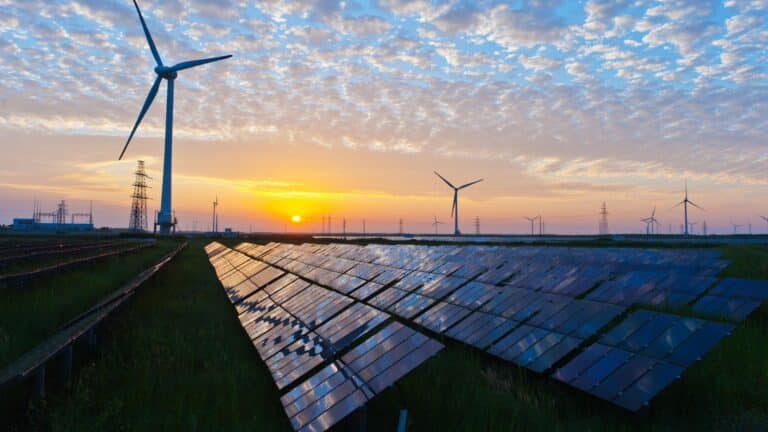
CLC contribute to the energy transition.
En ce qui concerne la transition énergétique, tout d’abord, le réseau des monnaies locales complémentaires rappelle qu »un objectif des monnaies locales est de réduire la dépendance des territoires vis-à-vis d’approvisionnements lointains, en favorisant les circuits courts et locaux. Développer les circuits courts permettrait d’éviter les émissions de gaz à effet de serre associées au transport de marchandises, même si le bénéfice réel pour l’environnement est discutable.[7]
Some local currencies aim to reduce greenhouse gas emissions within their circulation area by encouraging carpooling for nearby travel. Thus, ECOSYSTE'M, an initiative launched in May 2014 in the municipality of Ayen in Corrèze, combines local carpooling and local currency: carpooling practices are "rewarded" with "Y'aca," a local currency circulating in the area, based on a mileage log. Local currencies can also contribute to reducing fossil fuel consumption by supporting renewable energy sectors.
In Yoro, Honduras, the Gota Verde project, deployed at least between 2007 and 2011, supported the local development of biofuels produced by small farmers without threatening food sovereignty, by including the circulation of a local currency in the system. Another example in Ardèche, the association Les lucioles, which carries the local currency of the same name, participates in creating a local wood sector by mobilizing the savings fund constituted by euros exchanged for lucioles.
Local currencies support organic farming and fair trade.
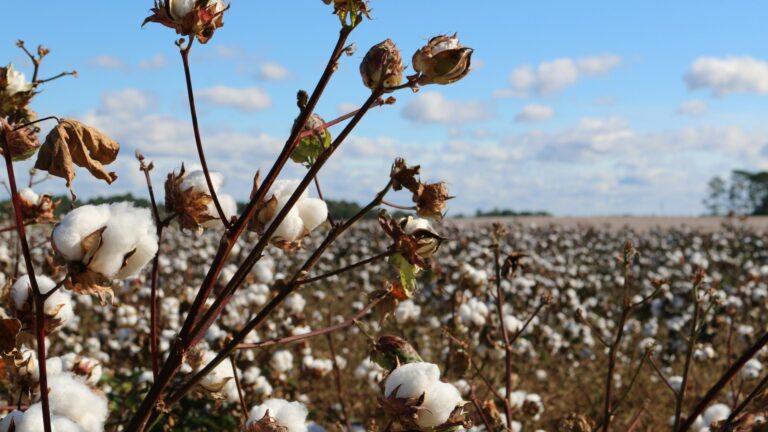
A local currency can bring together partners in its network who prioritize certain types of products or modes of production, such as organic farming or fair trade. The Pyrène, a local currency circulating in Ariège, thus brings together many producers of fruits, vegetables, and cheeses from organic farming, as well as merchants selling clothing and textiles made from organic cotton. However, to our knowledge, there are no currencies that require support for organic farming and fair trade as a firm condition for membership.
Exchange systems based on time or another unit contribute to the circular economy.
Other systems, which organize the exchange of services or eco-responsible behaviors through a unit of value, particularly contribute to the circular economy, especially by emphasizing waste valorization.
Thus, in the favelas of Curitiba, depositing a bag of sorted garbage in the containers for glass, paper, and plastic installed at the entrance of the favelas entitled one to a free public transport ticket. This initiative launched by the mayor of Curitiba as early as 1971 allowed the exchange of approximately 11 million tons of household waste in the 60 poorest neighborhoods of the city for about 1 million transport tickets. Household garbage bags were also exchanged for school supplies or food items[8]<. Additionally, local exchange systems (SEL), by promoting exchanges of repair and maintenance services for products, as well as donation and sharing, also contribute to waste prevention and valorization.
There are avenues to enhance and amplify the contribution of CLC to the ecological and energy transition.
While the actual contribution of local currencies to the ecological and energy transition remains to be quantified, their role in activating the transition in territories is undeniable and could be amplified. Several action avenues emerge:
- First action avenue: define, from the design of the systems, environmental objectives in light of the territory's challenges to amplify the added value of these systems;
- Second avenue: develop methodologies for assessing the impacts and social, economic, and environmental benefits of local currencies to quantify their contribution to the territory's economy and environmental profile, thus optimizing their development; and
- Third avenue: local currencies could be connected to public policies supporting ecological investment.[9]< This would address both the issue of sustainable financing for low-carbon investments and support the financing of local ecological projects.
In a context where the law of 17 August 2015 regarding the energy transition for green growth gives a leading role to territories, innovating in the design and use of local currencies as a tool for this transition is a priority for research and experimentation.
References
- [1]< <Association4D (2013), Three visions of a successful future for France in its international context by 2050, April 2013. Created as part of the "Long-term Transitions to an Ecological Economy" program, led by the Foresight Mission of the Ministry of Ecology, Sustainable Development, and Energy.
- [2] Magnen J-P and Fourel C. (2015).
- [3] La loi du 31 juillet 2014 relative à l »économie sociale et solidaire a donné une base légale aux monnaies locales complémentaires.
- [4] Eco Iris website: www.ecoiris.be
- [5] Charter of values of the Gonette. Available at: http://www.lagonette.org/charte-des-valeurs-de-la-monnaie-lyonnaise/. Date accessed: January 19, 2016.
- [6] Charter of values of the association Le Stûck. Available at: http://www.lestuck.eu/la-charte/. Date of consultation: January 19, 2016.
- [7] Une note datée de mars 2013 du Commissariat général au développement durable (« Consommer local, les avantages ne sont pas toujours ceux que l’on croit ».) souligne en effet que les bénéfices des circuits courts de commercialisation des produits agroalimentaires sont « davantage socio-économiques » qu »environnementaux, tout en reconnaissant que les circuits courts restent « cependant une source possible d »aménités environnementales »
- [8] Lietard B. and M. Kennedy (2008), Regional Currencies: New Paths to Sustainable Prosperity, Editions Charles Léopold Mayer.
- [9] Jérôme Blanc and Baptiste Perrissin Fabert (2016), Financing the ecological transition of territories through local currencies. Veblen Institute for Economic Reforms. January 2016. 'Complementary local currencies: a tool for ecological and energy transition'