
Author: Guillaume Le Port, BlueSeeds
A crisis that questions our lifestyles
And after? That question is on everyone's mind. And after? When the lockdown ends, when cases decrease, when life returns to normal. And after? Recently, the question of modifying our lifestyles to address the climate and environmental crisis has emerged more prominently in public debate. And after? The health crisis we are currently experiencing has more tangible repercussions for the population than the climate and environmental crisis we faced and will continue to face. It thus forces us to make rapid changes, highlighting society's resilience capacity in the face of a large-scale shock. But tomorrow, what will remain of this hesitant collective will to meet the climate challenge in the face of an economy that needs rebuilding?
One sector in particular symbolizes this upcoming economic and environmental dilemma: mass tourism[1]
Mass tourism: an economic model under pressure
How many of your friends, family, or work colleagues have talked to you in recent weeks about canceled flights, postponed trips, or concerns about getting refunds for their vacations? Our vacation and travel habits are being heavily questioned by the onset of this crisis. The response of the mass tourism sector to this crisis will likely reflect the aspirations of post-pandemic society: a recovery of activity favoring a quick return to a status quo, or a genuine questioning of our desires and ways of consuming?
Mass tourism illustrates the paradox our economy faces: contributing to the financial health of many states around the world while its activities sometimes heavily impact the environment and ecosystems. Today, mass tourism generates about 10% of global GDP and employs 1 people worldwide directly or indirectly 10. For example, the Mediterranean basin is the world's top tourist destination, attracting a third of international tourists, or 2 million people per year. But this tourism success comes with a significant number of pressures (coastal pollution, excessive urbanization, etc.), increasing year by year. Forecasts estimate the number of visitors to the Mediterranean basin at 306 million in 500 2030, nearly double what it is today.
A major crisis… but a resilient sector
The current health crisis is having a significant impact on the entire tourism value chain, which relies on substantial international flows. This is already the case in major northern Mediterranean destinations, which have banned travel (both domestic and international) and closed tourist establishments (bars, restaurants, museums, etc.). Nevertheless, according to market specialists, mass tourism is one of the most resilient economic sectors in times of crisis, as it is capable of returning to its standard revenue levels after a more or less short period of adjustment. The World Economic Forum estimates that it will take about 10 months after the end of the COVID-19 pandemic for global tourism to generate financial flows similar to those before the crisis. To recover, industry players will employ various marketing strategies aimed at quickly attracting tourists.

Between status quo and transformation of practices
A rediscovery of proximity travel locations;
As philosopher Corinne Pelluchon explains in an article in Le Monde from 23 March 2020, "it is not the epidemic itself that will lead to this transformation [...] of our lifestyles and our entire economic system based on a form of excess, of omnipotence," but rather the time it gives us. This time that is offered to us should indeed allow for an "individual and collective transformation, so that the awareness of our vulnerability, our belonging to a world larger than ourselves, and our connection to the living [...] transforms our behavior." According to her, this epidemic could be "an opportunity to ask what makes sense in human life: is it taking a plane for a few days' stay or for a more or less useful conference on the other side of the world?"
Towards more local and sustainable tourism
This "suspended time" that we are offered is therefore an opportunity to rethink our travel modes to favor alternative forms of discovery, in order to mitigate the negative impacts of mass tourism. Continuing with the example of the Mediterranean, tourism can thus be anchored in a more local and ecotourism approach, offering the following opportunities for economic development:
- A revival of local commerce in the vicinity;
- The development of eco-responsible tourism activities, supported by new public policies regarding tourism;
- A redefinition in the long term of what we expect, as individuals, from the concepts of travel and tourism (shifting from mass tourism to so-called slow tourism[4]).
- It is certainly neither possible nor recommended to try to apply the organizational functioning of an ant colony or a beehive to a business. The idea is rather to draw inspiration from key principles of living systems.

Our proposals for rethinking tourism: between individual choices and public policies
The reorientation of our consumption patterns and strong political support are the directions advocated here to ensure a redesign of our travel and holiday consumption modes towards greater sustainability. These directions are divided into three major axes:
A chosen direction for our individual consumption patterns.
As individuals, we are given time to rethink how we consume, so that our consumption choices become a tool for political and social decision-making and transformation.
A "forced" direction for our individual consumption patterns.
Due to its exceptional and anxiety-inducing nature, this period will leave potentially beneficial legacies for a more reasonable approach to travel (fear of traveling far, decrease in purchasing power, etc.);
A political awareness of the necessary relocalization of economic activities.
For example, alternative initiatives offering innovative forms of tourism are increasingly numerous in the Mediterranean region: pescatourism[6], hiking, discovering crafts and permaculture, staying with locals, etc.
Such sustainable tourism initiatives could, in the future, be more strongly supported by Mediterranean states, which have been severely affected by the pandemic. These examples should demonstrate that a local and reasonable tourism economy is possible and offers a viable alternative to mass tourism. This new approach to tourism will thus favor economic benefits more equitably captured by local communities while reducing the environmental impacts of the sector.
If this forecast proves correct and global tourism actors rely on past practices to revive their activities, it will mean that the crisis we are experiencing has had

Conclusion: an opportunity to seize to transform the model
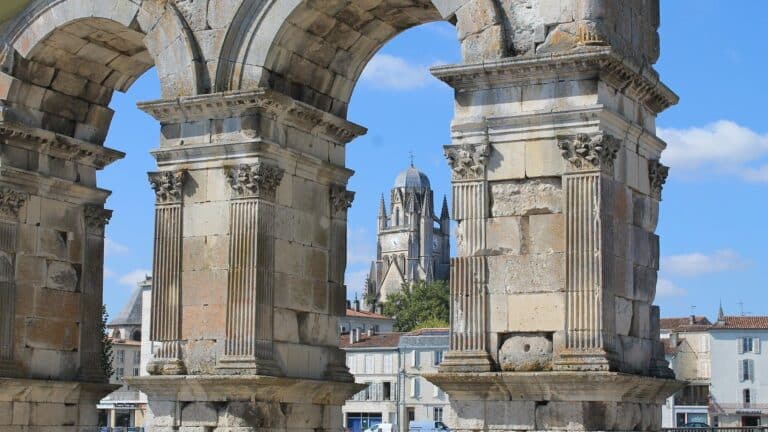
In conclusion, the economic stakes related to mass tourism in the Mediterranean are such that the sector could rebound and strengthen as soon as the pandemic is resolved. This scenario would create additional pressures on the Mediterranean coastline and its ecosystems. The time for reflection, albeit imposed, that we currently have is an opportunity for Mediterranean stakeholders to redefine how we wish to discover and cherish this shared space.
References
- [1] The World Tourism Organization estimates that 95% of global tourists concentrate on less than 5% of the land area: this estimate represents a preliminary geographical definition of mass tourism. The latter can also be described, according to geoconfluences, as "the most recent tourism system, based both on access for the greatest number to tourism and on the individualization of practices, standardized or personalized, repetitive or innovative."
- [2] World Travel & Tourism Council, 2019. Travel & tourism Economic Impact in 2019.
- [3] UNWTO, 2012.
- [4] In the Journal of Travel Research, in 2014, researchers Haemoon Oh, A. George Assaf, and Seyhmus Baloglu describe slow tourism as a concept encompassing "a series of spatio-temporal practices, immersive modes of travel, and ethical relationships based on the desire to connect in certain ways and disconnect from others. In recent years, slow tourism has shifted from mere environmental sustainability to focusing on the practice of time and space to enhance personal satisfaction and well-being." Thus, slow tourism is an innovative form of tourism that has developed based on older social movements like slow food and slow cities.
- "Calls for relocation and economic recovery cannot, in fact, hide the intrinsically unsustainable nature of the global production system. [...] Entrusting the majority of the economy and its financing solely to financial markets and multinational companies, making short-term financial profitability the main decision-making criterion, acts as a factor of aggravation and escalation in unfavorable situations. [...] The demand for a relocation of activities to reduce our ecological footprint and generate sustainable, quality jobs, by fostering international cooperation and solidarity, should guide the structural choices to be made in the coming weeks." https://www.lemonde.fr/idees/article/5/2020/03/relocaliser-n-est-plus-une-option-mais-une-condition-de-survie-de-nos-systemes-economiques-et-sociaux_22_6034010.html